Sunday, 22 June 2014

PBL Research

Research and thoughts on PBL
Over the past 3 to 4 years, the Edexcel exam board in the UK has produced exam style questions for AS/A2 (A Level) Biology that are increasingly more applied. In the UK, students are expected to submit their practical write-ups and a research paper as coursework to be assessed; as an international school, we are not bound by this coursework requirement and our students sit a written alternative practical exam. While my students do not like having to write practical investigations to the degree I ask them since they aren’t submitted as coursework, I am certain that the skills they acquire from going through the process are a necessary ingredient in their ability to perform while in these written exams.
I believe that having my students go through the process of proper investigation and research, they will be prepared for the strange scenarios the examiners present in the written exam.
What is more of a concern is that Edexcel have begun to introduce these styles of questions for IGCSE; the students have little experience of the thinking processes required of them to answer these questions. Anecdotally, I have found that students who are very good at being “traditional students” and do well in the traditional learning environment can struggle, whereas students who are less rigorous learners but have good common sense can see the questions for what they are!


Stephanie Bell (2010) highlights a study in the UK by Boaler (1999) where they found that three times as many PBL students achieved the highest possible grade in national exam. “Students at the PBL school were equally able to answer procedural questions that used formulas, but they were superior in answering applied and conceptual problems (Boaler 1999).”


I am hoping that by introducing more PBL style lessons for my students that I will be able to enhance their skills in identifying the scenarios they are presented with for what they are by asking the correct questions. At the moment, my colleagues call this exam technique but it is the skill of critical thinking that needs to be targeted as a whole.


“With PBL, assessment is authentic. We measure a child’s performance via rubrics, but a critical aspect of this model includes self-evaluation and reflection. Children learn from their processes. They reflect on how well they worked in a collaborative group and how well they contributed, negotiated, listened, and welcomed other group members’ ideas. Students also self-evaluate their own projects, efforts, motivations, interests, and productivity levels. Students become critical friends by giving constructive feedback to each other, which helps them become aware of their own strengths and improve on their interactions with each other.”


The self-evaluation and reflection part of PBL is clearly a huge part that cannot be overlooked. In a content heavy syllabus with little time for reflection, students often don’t get, or take, the time to consider their meta-cognition. If PBL is to be successful, I will need to carefully plan my contact time with my students in order to provide the support and reflection time they need; a combination of PBL, Flipped Lessons, and reflection time should do it!


Kirschner, Sweller and Clark (2006) are highly critical of the value of the constructivist theory that lies behind PBL:


“In so far as there is any evidence from controlled studies, it almost uniformly supports direct, strong instructional guidance rather than constructivist-based minimally-guided learning. Even for students with considerable prior knowledge, strongly guided learning can be equally effective as unguided approaches. Not only is unguided instruction normally less effective, there is evidence that it may have negative results when students acquire misconceptions or incomplete knowledge.”


Clearly, one should consider the issues they raise regarding “minimal guidance” in order to ensure students do not acquire misconceptions in their knowledge and understanding of the science concepts taught.


Andrew Provan (2011) also highlights the issues of minimal guidance in PBL in his article regarding the the delivery of the medical cases in a Problem based approach to learning at British Columbia. He points out how the course organisation expects students to hypothesise on problems before they have any base knowledge around which the problems are set; this leads to the students going in the wrong direction for their research and that the research is unnecessarily time consuming in an already packed course.


Considering the workload A Level students have in my current school where they study 3 or 4 A Levels plus the Extended Project Qualification, having students research all of their content and self study must be an unreasonable expectation when direct instruction and classroom activities supported by the teacher are more efficient.

Project Idea
A large part of the AS and A2 Biology syllabus is tied to plants; photosynthesis, flowering, hormones, totipotency, mitosis and cloning, seeds, conservation, affects of global warming. 

The project I would like my students to undertake will likely be based around the Driving Questions of:

  • Can you produce Food for the Future?
  • Can you generate sustainable Fuel for an energy hungry society?
The students will need to grow their own plants and maintain them over the duration of the course. The purpose of the project is to have the students take ownership of their learning and to be motivated in the lessons on plants as they will use their own plants in the practical lessons.

Their initial research is likely to be in germination of seeds, and on which plants will best suit their desired project goal. In order to ensure the students are further "hooked" by the project, their first lessons on seeds will be followed by a scientist from the Millennium Seed Bank giving a live virtual tour of the MBSP and answering the students questions regarding seed conservation and germination strategies.

As the students progress through the course, their plants and how they care for them, will become the central focus around which the content of the syllabus will be hung. 

The students will visit local universities and plant research centres in order to learn first hand the techniques required to allow them to investigate the propagation of their "food plant" or "fuel plant." If at all possible, students will gain experience of genetically modifying their plants in order to cause them to be more productive in harsher conditions predicted by global warming predictions.
As a culminating presentation, the students will present that plants/food/bio fuel at the school summer fair and pass on their projects to the younger students by using the seed banking techniques they have learned from the MBSP.


References:


Bell, S. (2010). Project-based learning for the 21st century: Skills for the future. The Clearing House, 83(2), 39-43.


Kirschner, P. A., Sweller, J., & Clark, R. E. (2006). Why minimal guidance during instruction does not work: An analysis of the failure of constructivist, discovery, problem-based, experiential, and inquiry-based teaching. Educational psychologist, 41(2), 75-86.

Provan, A. (2011). A critique of problem-based learning at the University of British Columbia. Retrieved June 22, 2014, from http://www.bcmj.org/mds-be/critique-problem-based-learning-university-british-columbia.

Saturday, 21 June 2014

PBL Project Research


Cool PBL projects

All of the projects I looked at had well crafted Driving Questions that hook the students. The best projects were those that the students had developed the Driving Question themselves! 
What was clear from each example I looked at was that they were closely tied to the standards; learning objectives and assessments were clearly identified and communicated to the students. A good example of this was i-EARN's Find Solutions for Hunger.

Virtual School House: Tropical Rainforest Interactive Presentations http://www.virtualschoolhouse.net/r_o.htm 

In this project the students, teachers and local experts work together to develop a tropical rain-forest in a disused greenhouse. The students had to develop a bid for the acquisition of the materials ($8000) and had to do hands on work to a deadline to construct the habitat in time for a public viewing. The rain-forest is now used by the students to teach elementary students about the importance of the rain-forest.

I am impressed by the ownership that these students take and their persistence in finishing it. The value the completed project provides to the community is inspiring.

This project makes me think about the rain-forest on my doorstep but don't ever see! Much of the rain-forest has been cut down and replaced with oil-palm plantations; it is sad, but the people need their oil! Students could replant the school grounds with the indigenous plant species to give the school more cover and protection from the Sun; this would be interesting and probably good for the younger students I teach. For the older students whose exam specification has several elements of plant biology tied to plant growth, conservation, DNA profiling, etc., I would be more inclined to have the students investigate the food production and sustainability of plants, particularly drought resistant species.


High Tech High's African Bushmeat Project: http://www.africanbushmeat.org/

The students developed a more effective way of using DNA profiling and PCR to identify the species of meat in order to help the conservation efforts in Africa. Endangered animals are illegally killed and sold as other meats; the students work actually advanced the efforts to reduce this practice.

I think it is amazing that students can have this kind of input and affect on real-world issues. I want to see my students use the techniques of PCR and DNA-Profiling to identify traits in plant species that allow them to grow well in dry and hot conditions. I am currently working on several possible university contacts that may help us develop our Driving Questions and allow us work alongside their teams in their labs.

Sunday, 15 June 2014

PBL and Vocational courses; just a thought!


When I was a kid, my town had a Polytechnic that ran vocational courses and they tended to attract those students that were not capable, for whatever reason, of being able to attend the High Schools and Grammar School. It seems to me that vocational courses and the concept of the apprenticeship is precisely what we are trying to mimic in our classrooms by doing PBL.

If schools are serious about preparing students for the "real world", should they begin to take this concept to the next level and have vocational units specific to the job roles students may actually do when they leave school.

My brother might have been what is termed an 'at-risk' student. He left the Grammar School because he always skipped school and entered the Poly where he did a Meterology, 100%, Project course as an A Level. He never turned up to class...but skateboarded (this was 25 years ago when skateboarding in N.Ireland was done by 5 people) to the Stevenson Screen to take his readings and make his weather predictions every day; he aced the project! He has since joined the Royal Navy as a Marine Engineer and was awarded an OBE from the Queen last month! 

Traditional schools and traditional teaching styles aren't always suitable for every student, but that doesn't make them bad students, or less intelligent or productive to society!

Project Based Learning

In the last couple of years I have been inspired by Simon Sinek and Zoë Elder to present content to my lessons in a more interesting way. Simon's "Start With Why" concept and his great Ted Talk was the start of my movement forward from the safe 3 course meal my lessons had become.  Zoë brought Simon's words into focus with her great insights and applications to the classroom; each module I teach now starts with the Big Question, and each lesson has the objective framed as a question for my students to think about as they enter the room.

I have used Simon's Golden Circle to frame my own classroom philosophy for what I do and how I work:
I believe in challenging the standard classroom model, in creating scenarios that cause deep thinking in students, and in allowing students to choose their own path and style of study.
I don't always manage it, but through my studies and research, and liberal use/abuse of technology, and with time, I have changed my classroom and the experience of my students for the better. I believe in what I do and I can back it up; some traditional teachers find my methods somewhat disruptive! ;-P

Which brings me to Project Based Learning, Problem Based Learning, and Inquiry Based Learning. They are similar and need defining. I have used the techniques without awareness of what they were called as they just make sense; Problem BL is my favourite for KS3 Physics, Moments - Crevasse Crossing! (get in touch, I'll send it to you! It started off as "Adam Levine needs to cross a ravine") 

What is Project Based Learning?

The Buck Institute for Education (BIE.org, n.d.) defines Project Based Learning as "a teaching method in which students gain knowledge and skills by working for an extended period of time to investigate and respond to a complex question, problem or challenge." BIE go on to define the essential elements for Project BL to include:
  • Significant content; based on the specification and concepts at the core of the academic subjects.
  • 21st Century Competencies; the 4Cs - critical thinking ( careful thinking, done reflectively, with attention to criteria), collaboration, communication and creativity and taught and assessed.
  • In-Depth Inquiry; students pose questions and develop answers using resources over an extended time.
  • Driving Question; students have an open-ended question that intrigues them and stimulates them to explore to find the answer.
  • Need to Know; Students see the need to gain knowledge, understand concepts, and apply skills in order to answer the Driving Question and create project products, beginning with an Entry Event that generates interest and curiosity.
  • Voice and Choice; Students are allowed to make some choices about the products to be created, how they work, and how they use their time, guided by the teacher and depending on age level and PBL experience.
  • Critique and Revision; The project includes processes for students to give and receive feedback on the quality of their work, leading them to make revisions or conduct further inquiry.
  • Public Audience; Students present their work to other people, beyond their classmates and teacher. This authentic audience can further motivate the students to do their best work; it also access Redefinition as part of SAMR (Dr. Ruben R. Puentedura).
Vanessa Vega of Edutopia (2012) outlines PBL as:
  • students learning knowledge to tackle realistic problems as they would be solved in the real world
  • increased student control over his or her learning
  • teachers serving as coaches and facilitators of inquiry and reflection
  • students (usually, but not always) working in pairs or groups

I want to know how to assess creativity!
John Larmer of BIE makes some suggestions on how to teach the 4Cs, from here assessment can be designed - http://bie.org/blog/start_the_year_with_a_project_or_wait

What is the different between Project Based Learning and a WebQuest?
WebQuests can provide a contained list of resources to guide students in their research, this will support younger students and speed up the researching process if their are time restraints

Why should teachers consider incorporating PBL in their classroom?

Project BL allows for meaningful, engaging work by students that they can relate to their real lives. Since students are more interested in the content, they are more likely to remember the content they come into contact with, this knowledge can be applied more effectively later and in other contexts. "In PBL, students...learn how to take responsibility and build confidence, solve problems, work collaboratively, communicate ideas, and be creative innovators." (BIE.org). Whith the technology available to students to access information and communicate/collaborate, Project BL is an excellent way to introduce the technology standards to the classroom; bringing experts from the field of the project into the classroom for the students to meet and acquire first hand evidence.

What considerations are important when incorporating a Project Based Learning approach into the classroom?

Students need the skills of working in a group, communicating effectively, researching and presenting. These skills must be taught and can be introduced as discrete lessons or as mini-projects designed to enhance the behaviour/skill that is the learning objective.
Teachers must support their students in order for them to do the best they can. Providing rubrics and the training the students will need to use them is necessary, as is giving them examples of what a success outcome to a project looks like. Introducing experts to the students early on may motivate them to perform better.
Students need to know that they are on track and doing a good job. Regular formative feedback via specified checkpoints in the project timeline are necessary to guide the students and support them. Students will need time to revise and improve their work; reflecting on their performance and putting into place the advice of their teacher and peers.
The students must feel attached to the project; it must be authentic to them and they should care. Who they present their work to may place an extrinsic pressure on the students to make sure they don't embarrass themselves, or they may be intrinsically motivated to impress those that they are presenting to.


Describe qualities of a successful project.
What issues must a teacher consider that are specific to PBL instructional strategies?


Teachers must acquire the skill of defining the Driving Question:
"...problems/questions must be relevant to teachers’ required curricula, or teachers will not be able to justify the amount of time needed for students to work through them. A good driving question is defined as one that is meaningful to students, includes relevant content, involves authentic problem solving, lends itself to collaboration, and is broad enough to permit students to develop their own questions and investigations" (Lehman, Ertmer, Keck, & Steele, 2001).
The strength of the driving question may hook the students' curiosity and they will become invested and put in the effort required. 
Teachers must take on a different role within the learner-centered classroom; the management of the cooperation and collaboration of the students, their roles within their groups, and the engagement of the students during the project. Teachers must become facilitators as opposed to instructors, changing both how and what they teach (Ertmer & Simons, 2005).
Project BL outcomes are generally assessed through the authentic product that is created, however tests and quizzes can be used to test the knowledge of the underlying concepts and their understanding.
Vanessa Vega (2012) summarizes the research findings for a successful project as:
"A realistic problem or project
  • aligns with students' skills and interests
  • requires learning clearly defined content and skills (e.g. using rubrics, or exemplars from local professionals and students) 
Structured group work
  • groups of three to four students, with diverse skill levels and interdependent roles
  • team rewards
  • individual accountability, based on student growth 
Multi-faceted assessment
  • multiple opportunities for students to receive feedback and revise their work (e.g., benchmarks, reflective activities)
  • multiple learning outcomes (e.g., problem-solving, content, collaboration)
  • presentations that encourage participation and signal social value (e.g. exhibitions, portfolios, performances, reports) 
Participation in a professional learning network
  • collaborating and reflecting upon PBL experiences in the classroom with colleagues
  • courses in inquiry-based teaching methods"

What types of students will be successful in PBL environments?
Prabhu Nasargikar (2010) describes the 'ideal' attributes of a successful PBL student as:

  • Knows their role in a group,
  • Knows to ask empowering questions,
  • Monitors their progress through self-evaluation and motivation,
  • Bonds with other students to achieve goals,
  • Develops thoughtful and well structured approach to guide choices,
  • Fosters collaboration with other group members to create a climate of trust.
While these are ideal attributes, these skills need to be fostered and are what K-12 teachers would be aiming to generate from the process of Project BL.

A student who can to think critically, find, evaluate, and use appropriate learning resources, work cooperatively in teams and small groups will be most successful in Project BL. Basically, resilience!
Nona Barker listed these attributes for her students:

  • willingly ask questions and discover answers
  • be curious and inventive
  • be active listeners and good communicators
  • actively participate in learning process (engagement and motivation)
  • work collaboratively with others
  • work independently, when needed
  • manage time effectively
  • possess research and reasoning skills
  • set and meet goals / benchmarks
  • be able to critique their work and the work of others (and revise it)
  • embrace ownership of project
  • willingness to demonstrate and share knowledge with other


What are the current and potential issues surrounding the use of Project Based Learning in traditional or nontraditional schools?

For traditional schools, the requirement to meet the curriculum makes it difficult to implement Pprject BL fully. There is a constant need to pack content into an already packed timetable; I currently receive 2 hours per week to deliver a course that other equivalent subjects get 4 hours for! For schools that are fee paying, the parents have an expectation that their children to pass exams; sadly an instructionist method is the must effective way of importing content knowledge in an environment such as this.
For the non-traditional school, students develop the skills that are sought after by employers, however universities in the UK require equivalent qualifications to AS and A2; Montessori students still do GCSE and A-Level!

References

BIE (n.d.). What is PBL? Buck Institute for Education. Retrieved June 10, 2014,     from http://bie.org/about/what_pbl

BIE (n.d.). What is PBL? Buck Institute for Education. Retrieved June 10, 2014, from http://bie.org/about/why_pbl

Elder, Z. (2012). Full on Learning: Involve me and I'll understand. Crown House Publishing Company, UK.

Ertmer, P. A., & Simons, K. D. (2005). Scaffolding teachers’ efforts to implement problem-based learning. International Journal of Learning, 12(4), 319-327.

Larmer, J. (2013). How to Use the “4 C’s” Rubrics. Buck Institute for Education. Retrieved June 10, 2014, http://bie.org/blog/how_to_use_the_4cs_rubrics.

Lehman, J. D., Ertmer, P. A., Keck, K., & Steele, K. (2001, March). In-service teacher development for fostering problem-based integration of technology. SITE (Society for Information Technology and Teacher Education) 2001 Conference Proceedings. Charlottesville, VA: Association for the Advancement of Computing in Education.

Nesargikar, P. (2010). From student to tutor in Problem Based Learning: An Unexplored Avenue. Retrieved June 14, 2014, from http://www.bjmp.org/content/student-tutor-problem-based-learning-unexplored-avenue.

Sinek, S. (2011). Start With Why. Retrieved June 14, 2014, from https://www.startwithwhy.com/.

Vega, V. (2012). Project-Based Learning Research Review | Edutopia. Retrieved June 14, 2014, from http://www.edutopia.org/pbl-research-learning-outcomes.

Thursday, 12 June 2014

Defining Educational Technology


I am stuck between considering myself an Educational Technologist, Instructional Technologist, Instructional Designer or a Learning Technologist. I am sure I do elements of all of these in my role as a K6-12 teacher, technology coach, and a developer of training resources for teachers in the use of technology.

How are the terms defined by researchers and the organisations that define the brand?

Educational Technology -
The Association for Educational Communication and Technology’s definition of educational technology given by Januszewski & Molenda (2008):

“Educational technology is the study and ethical practice of facilitating learning and improving performance by creating, using and managing appropriate technological processes and resources” (p. 1).

Instructional Technology -
"Is the theory and practice of design, development, utilization, management, and evaluation of processes and resources for learning" (Januszewski, 2001).

The two definitions above are similar. Januszewski & Molenda focus in on the facilitation of learning and the improvement of performance in their Educational Technology definition while the Instructional Technology definition has the extra evaluation term included.

Larson and Lockee (2013, p7) place more emphasis on the process: 
"...instructional technology as a process refers to the systematic treatment of the craft of designing instruction, through the application of learning theories and the use of technology products to support solutions to educational problems."

Yes, I agree with this but it doesn't tune Januszewski’s Instructional Technology definition any further, rather it enhances the message and provides greater clarity to the definition.

I do not consider myself an instructor, particularly when I am in my K6-12 classes where I aim to be a facilitator. The professional development sessions I organise are aimed at giving teachers the opportunity to find the answers for themselves and try out new styles and skills. Therefore, I like the current definition for Educational Technology but would improve it by including the “evaluation” term as a process - iterative evaluation must always be involved in order to improve the outcome:

“Educational technology is the study and ethical practice of facilitating learning and improving performance by creating, using, managing, and evaluating appropriate technological processes and resources”

While technological products continue to advance faster than the rate at which researchers can gauge their effect on our ability to learn with them, do we need to incorporate a consideration for mobile technologies, gamification, games, MOOCs, etc. into the definition? What about wearable and implanted technology, 3D displays, and immersive technologies?  Or do we need to consider social media and connectivist approaches to learning? I believe the definition covers these as it refers to “the study...of facilitating learning” and “ using..., and evaluating appropriate technological ...resources.” The definition should be able to incorporate new technological products, processes and theories.

I return now to my original question - am I a Learning Technologist or an Educational Technologist?


References:

Januszewski, A. (2001). Educational Technology: The Development of a Concept. Englewood, CO: Libraries Unlimited, Inc.

Januszewski, A., & Molenda, M. (2008). Chapter 1: Definition. In Januszewski, A., & Molenda, M. (Eds.), Educational technology: A definition with commentary. New York: Lawrence Erlbaum Associates.

Larson, M. & Lockee, B (2013). Streamlined ID. A Practical Guide to Instructional Design. New York and London, Routledge

Lowenthal, P. & Wilson, B. G. (2010). "Labels Do Matter! A Critique of AECT’s Redefinition of the Field." TechTrends 54.1 (2010): 38-46.

Sunday, 11 May 2014

Final Project Portfolio Site Self Assessment

The Google Site that houses all of my objects for the "Managing Technology Integration in Schools" module is embedded below and accessible here.


Tuesday, 6 May 2014

Blogging Review

"To what degree you met each of the criteria and then propose a final numerical grade."


Due to my work schedule and other matters, the biggest difficulty I have had has been posting early in the week. In the Edtech 503 course, there was a stipulation that posts were done by Thursday so that commenting could be done over the weekend; this put a strain on me but it did have the effect of getting posts commented on! So, Timeliness has been my biggest struggle: at least one was late. That being said, the majority were posted on the day they were asked for.

With regard to content and readings/resources; I read all of the book. I had the book purchased some time ago by the school library so I had started reading it before the course. One thing I didn't do was refer only to the content in the book. In reading other student's posts and looking at their course objects, some felt like a regurgitation of Roblyer and Doering's ideas. For me, a blog is about my experience and what I took away from the process; I hope that comes across in my writing. Sure, I referred to other work to back up my ideas and thoughts - part of my reason for doing this MET course is so that I can back up what I say, and my ideas, with research and evidence. I'd say full marks for these.

Responses to other's posts. Define substantial! I find when I read my peer's posts that I agree, disagree, and have questions either way. Instead of flatly disagreeing, I prefer to ask questions like "what if...", "have you seen this?" I have wanted to continue those conversations but those I have posted to have not responded unfortunately! I'm pretty sure I have done a few fairly deep responses to people - perhaps I should have kept a record of them! Full marks ?!

541 Course Reflection

What I have learned and how has theory guided my work?
I have been using technology in my classrooms for a long time; 15 years ago I was using Flash 3 to develop engaging websites and HTML, databases and Perl to develop self-marking, multiple choice tests. Over the last 10 years I have found some very good uses for technology with my students, but on occasion I have had to stop and question what I was doing and why I was doing it. 

The main thing I will take away from this course is that Relative Advantage must be considered before the introduction of technology. The questions I have posed for myself in the past were about Relative Advantage but I didn't have a name for it back then! I knew what I was trying to do wasn't achieving what I wanted so I had to reassess the purpose of using the tech.
Unfortunately, in the past, I had already introduced the tech to my students before they and I realised that it wasn't achieving the intended goal.

Through a combination of "design with the end in mind" instructional design principles and a thorough consideration of Relative Advantage, I intend to do a better job for my students and not waste their or my time in future!

Roblyer and Doering emphasise the Tech-Pack model throughout their book, giving worked examples of how teachers have assessed themselves in the project they are working on; I enjoyed reading these and allowed me to apply the examples to my own work and that of the teachers I coach.


How the course work demonstrates mastery of the AECT standards? 

Much of the course has allowed me to demonstrate use of computer based technology, media utilisation and technology integration, message and instructional systems design. Each of the objects are referred to in my blog and the labels identify each.


How you have grown professionally? 
How your own teaching practice or thoughts about teaching have been impacted by what you have learned or accomplished in this course? What will you do differently as an educator as a result of this course?
Through my own practice, working with other teachers, my students, the course, my PLN, etc., I do my best to give students choice. This course has brought me into contact with more options and possibilities to offer my students the choice I am trying to provide. As I mentioned above, I am more thoughtful about precisely why I want the students to use a technology and I will not force the "round peg" into a "square hole".

The Stem Cells Webquest activity I developed allowed me to design with the end in sight. I take more time now to consider what it is I want my students to get out of the task I set. In this regard, the learning objective and assessment criteria need to be more explicitly communicated to my students and I have been doing this via rubrics. In my role as a tech coach I have already been expressing this need to my colleagues and modelling the techniques.

While I was initially worried about the Language Arts, PE, Art, Music and MFL lesson activities I developed, the process allowed me to view content form the perspective of my colleagues in other departments. Doing these activities gave me a mechanism to provide more choice for my students as I was applying different strategies and tech to my science based content. From a broader perspective, I was reminded that there is a lot of crossover between the content students are expected to know for the various subjects they learn - the MFL lesson aimed at the environment has a lot of crossover with Biology but obviously from a different angle; PE, Biology and Psychology are similar in this regard. I hope to make connections with the other departments to build more rounded projects that have links across all the content students must learn.


Roblyer, M. D. & Doering, A. H. (2013). Integrating Educational Technology Into Teaching. Upper Saddle River, NJ: Pearson

Friday, 2 May 2014

Assistive Technologies in Biology

ASsistive Technologies in Biology

Students with Cognitive Difficulties


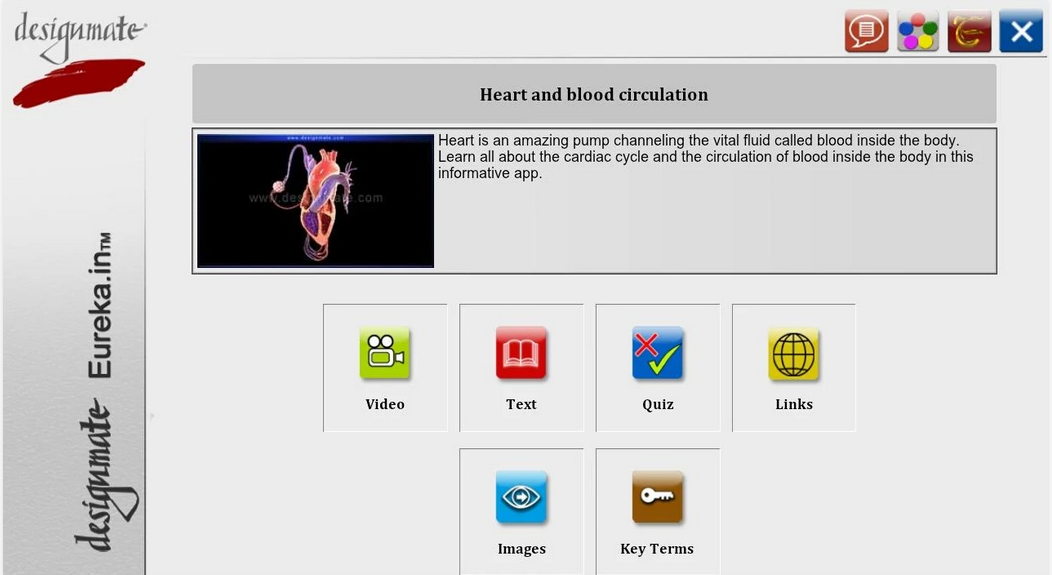
Apps such as Designmate’s Heart and Blood Circulation bring multimedia content, images, videos, screen readers, audio, quizzes with feedback, and key term glossaries together into one place. Students with cognitive processing difficulties can use the various media to enable them to access the biological content.


e-Bug is a digital learning environment that is animated and fun to navigate. Microbes are everywhere in the site and there are some very nice activities to do in and out of class. Quizzes and Games make this a great site for students with knowledge retention issues. The site is differentiated by the UK key stages; the earlier contact can be accessed by older students in order to help scaffold their knowledge.

Websites can be blocked, monitored for time, even keywords can be "turned off" during set times each day. If needed, you can set certain sites for time spent and add them to sets to block or unblock. Individuals that struggle to maintain concentration

Readers can control the text-to-speech in the books that MeeGenius is available for. The control offers students with processing disorders the chance to access the text at their own rate.


Students with Physical Difficulties

The virtual microscope benefits individuals with an array of difficulties. The site reads the the instructions and has a large image of a microscope that is easy to see. The instructions link with arrows and highlights to draw attention to the microscope. Individuals with limited movement but can access a mouse can learn to use the microscope.

Carolina’s digital microscopes have LED screens attached to the top of the device enabling the user to see the image of the slide without having to stand over the microscope; idea for wheelchair bound students. The microscope can be hooked up to a screen or projector to provide even larger viewing for those students who have trouble seeing the detail on the LED screen.

Google Voice allows students with motor skills impairments to access the search functionality of Google on a Chrome browser to enter search queries. The translation is remarkably accurate and is very fast.


Speak-It is a Chrome extension that reads multiple languages in male and female voices. German, French, Spanish, Italian, Russian, Chinese, etc.
This extension can be used for visually impaired individuals from these international backgrounds.
This extension could also be used to give Gifted and Talented language students listening tasks from native language web articles.


Students with Sensory Difficulties


Chromevox was developed by Google to provide accessibility tools native on the Chrome OS. It has a screen reader that can read single letters up to full paragraphs and is ideal for individuals with visual impairment. The speech can be altered in pitch and speed making the voice easier to listen to - lower pitch sounds older while higher sounds younger - the listener can choose the voice type they associate best with.
For unimpaired individuals that want to listen but can do so at a faster rate of speech, speeding up the speech can be achieved with this extension.

The page contains several links for webpage accessibility for the visually impaired. The page has been assessed at the highest level of high contrast colours.


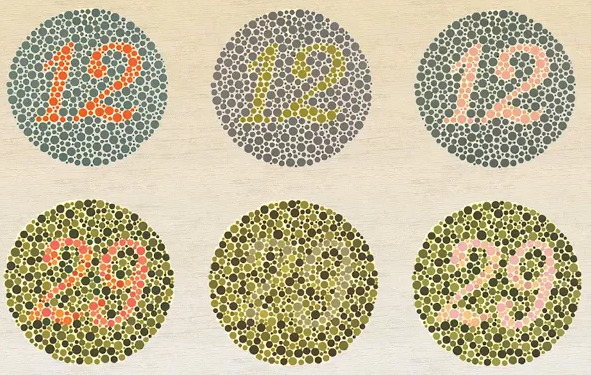
Daltonize is an extension that enhances colour contrast on webpages in order to allow colour blind individuals (tritanope, deuteranope and protanope) to tell the difference in colours. In the Biology class, this extension can also be used to simulate what colour blind individuals perceive; teachers can use the extension to develop material that use colours that work to generate the best contrast.


At-Risk Students

Careers
The ASPIRES site brings students into contact with careers in science. The lessons and activities are designed to give students the opportunity to see the possibilities beyond their immediate situation and motivate them to lift themselves out of their situation. The site has 11 case study lessons that help students take on the role of scientists.


Videos/TV shows and YouTube: Brainiac Science Abuse


There is much in science that cannot be replicated in the laboratory. Some Biology can be a bit “boring” and boredom can lead to misbehaviour by those students who, for whatever reason, are unable to focus in class. Targeted use of exciting media like Brainiac and Richard Hammond’s Miracles of Nature will help to allow troubled/at risk students focus and access the curriculum.

Interactive Narratives: N-Squad
The N-Squad site by RICE university has a module on Alcohol and its effects on the body. This digital animated narrative can be used to engage students from lower socio-economic backgrounds that tend to resort to alcohol abuse. The site educates the learner enabling them to make informed choices in their real life. Alcohol, nicotine and other drugs are embedded in the National Curriculum for Key Stages 3, 4 and 5. While they are considered pastoral issues, the Biology teachers address the “mechanics” of the drugs in the Biology class.

Games: Nobel Prize
The Nobel prize site provides games and animations that students can use and play to follow in the footsteps of the Nobel Prize winners of the past. Some schools will not permit blood in the classroom which can make the topic of blood, which is potentially very interesting, rather boring. Interesting and engaging games such as those offered by NobelPrize.org may be just what the bored and distracted student needs to stay on task.

Zondle and IAmLearning

Zondle and IAmLearning are games platforms with Gamification and Games As Rewards mechanics built into them. Science and Biology lend themselves to the types of questions that are available in these platform and “At Risk” students may find these mechanics engaging, allowing them to access the curriculum in a fun way. Students may not realise they are learning while they play and the quizzes record and report to the teachers the students progress avoiding the need for stressful summative tests.


Gifted and Talented Students

Speak-It is a Chrome extension that reads multiple languages in male and female voices. German, French, Spanish, Italian, Russian, Chinese, etc.
This extension could  be used to give Gifted and Talented language students listening tasks from native language web articles. It could also be used to assist students in their learning in a second language medium as the voices mimic stereotypical accents well for the language; assisting in the pronunciation of the written word.


This website provides engaging and challenging biology content including simulations, and videos, and online lab activities. Students with strong independent learning skills can access content from Stem Cells to Pharmacogenomics - the activities extend the classroom and allow G+T students take their studies to a university standard thus enhancing their breadth of knowledge at A-Level.


The History of Biology Game is a puzzle based game that takes the student all over the internet trying to solve biology puzzles from the development of the first microscope to synthetic organisms: it is HARD! G+T students in the A-Level biology class can  attempt to apply their knowledge of biology - protein synthesis and DNA replication - to the challenges in the game. Applications of the content studied at A-Level need to be used to successfully complete this game.