Showing posts with label 4-Professional Knowledge and Skills. Show all posts

Thursday, 10 September 2015

Application of research to the classroom: assessment for learning

I use multiple strategies in my lessons to enhance student engagement, motivation, progress and deep learning, but how often do we as teachers pick apart what we are doing and why? I grabbed a book out of my school's library for some light reading over the summer break--Evidence Based Teaching: a practical approach, by Geoff Petty--and I was reminded that the strategies we use to enhance the learning of our students have been thoroughly researched and there are some very worthwhile strategies that we should employ more often.

I was pleased to read Petty's example teacher Tina (p. 88) doing one of my lessons; it is almost identical in its constructivist/social constructivist pedagogical approach but I have applied some extra approaches here and there from my own experience.

The example Petty gives doesn't cover the whole lesson, so I am going to fill in the bits I do extra here; if you find his book you can compare!

Students are presented with the title and objective/s of the lesson. Setting the goals for students activates their thinking and begins the process of information/past experience retrieval from long term memory. I do not use statements such as "you will be able to....", I prefer to turn the learning objectives into questions. These questions are the first things the students see and they begin to address them as they sit down and prepare for the lesson; students don't get to sit and do nothing at the start of my lessons!
After 5 minutes, find out from the students what they know; write up on the board.
Identify what the class is currently struggling with and present on how that skill is done; use of some typical non-examples will enhance the presentation of the skill. Share a graphic organiser with the students that they can add notes to; in the GAFE classroom this would likely be a google drawing.
Students construct criteria for completing the skill effectively; students work in pairs and can snowball to 4s.
The teacher nominates a speaker from each group to offer a criterium. The teacher questions why that has been selected and requests members of the other groups to verify the criterion.
With a complete list of criteria, the students complete some products that are to be peer assessed.
The teacher circulates and identifies issues with the products and discusses these with the student in regard to the criteria listed; "look at your A; how have you done against the criteria?" The student self assesses and reflects on why they have not been successful. The teacher guides the student to identify what the error is and why they have made it. This form of AfL will generate deep learning as the student is actively thinking about the mistake they have made therefore altering and improving their mental model of the skill.
The students self assess their products then peer assessment takes place; all against the agreed criteria. The teacher can continue to circulate and supports those students who are having any difficulty deciding if the criteria are being met. Personally, I prefer to sit and observe/listen to the students as they peer assess. My students help each other and check each other's work before they come to me; "3 before me" I believe the strategy is called! I encourage my students to explain to the person they are assessing as to why they gave a mark from a mark scheme or the criteria provided. This explanation can lead to a productive discussion between the assessed and the assessor until agreement is reached; the teacher is the final arbiter in the process and can often come down to saying "...you are both correct because..... Let's give the benefit of the doubt and award the mark!"
By listening, watching and circulating, I find out what is causing the most issues for the students but to verify I will ask that the assessors write down on mini-whiteboards the criterion that caused the problem on the work they assessed. Doing this removes some of the anxiety and embarrassment from the individual while giving me a window into the class's overall performance. The most common difficult criterion I can then pick apart as to how to best address it for the next time.
Students improve their products clearly highlighting what needed fixing and why they were unsuccessful in the first place. The students take some time to update their ebooks with the success criteria for the skill and add photos of their products as evidence and for their revision. These notes are then reviewed by myself when I look at their GSlides eBooks using Goobric.
To finish the lesson, students can analyse some 'broken' non-examples to identify what is wrong with them and how they can be improved. This could be done from the interactive whiteboard with students using their mini whiteboards to communicate, or they could use their devices to give recorded responses using apps such as Pear Deck, Kahoot or Socrative. Kahoot has timings and leaderboards and brings an element of fun competition to the plenary. Pear Deck allows the students to change their answers if the teacher permits this which can be a bit of a giggle!

So what is going on in this lesson that makes it outstanding? Let's break it down from the top:
This lesson is an example of direct instruction whole-class interactive teaching with constructivist activities; Gangné's nine events of instruction are closely followed here. Hattie states that whole-class interactive teaching produces an average effect size of 0.81. 

Goal setting, Exemplars and Non-examples: Marzano identifies goal setting as having a 0.97 effect size. Giving students specific, achievable goals at the start of the lesson, gives the students a target to reach while activating their prior knowledge and experience of the topic. By providing exemplar material that students can use to 'calibrate' their thinking as to what a perfect piece of work looks like also gives them a finishing line to aim for. I use the finishing line example because, as a runner, when I go running with a coach I need to know how far I will be going in order to pace myself and adjust my effort. The non-examples come afterwards; these are mini assessments and can be used in a game like fashion with the students where they use the success criteria to identify what is wrong with the non-example. The use of the non-examples is also an opportunity for the students to assess and reflect on correctness and how to improve a piece of work.

Graphic organisers have been shown to have an effect size of 1.2; this is very high. As a teacher I can use the graphic organiser to demonstrate conceptual links between topics, but for students they can be used to review and analyse content and present the content in a reformulated fashion that has taken deep thinking to achieve. I am a fan of the atomistic mind-map to illustrate connections, and venn diagrams for compare and contrast activities.

Feedback- self, peer and teacher: Marzano identifies a 1.13 effect size on giving students highly specific feedback on the process and strategies they have employed in doing their work. This feedback can come from themselves, their peers or their teacher.
Identifying what went well, even better ifs, and using these to set appropriate targets for individual students to move their mental models forward.

Mastery learning:
Assessment proformas:

http://www.facdev.niu.edu/facdev/resources/guide/learning/gagnes_nine_events_instruction.pdf
http://www.instructionaldesign.org/theories/conditions-learning.html

Tuesday, 2 December 2014

Networking

The CISCO ICDN 1+2 book is very good, if only 3 inches thick!

The networking course follows this book closely and supports it with links to videos on YouTube. I  enjoyed working through the binary and hexadecimal transformations, and designing the networks.

While the only evidence of this process is the answers to the questions/labs submitted to the course, I have been able to use my new knowledge in school. While trying to do a Google Hangout into school with a colleague and our shared class (I was off campus), we discovered that I could see and hear everything that was going on in the class but they could neither see nor hear me.

After presenting this issue to out school IT helpdesk and suggesting that they trace the packets and ports, the IT team found that both Skype an Google Hangouts were using the same port as the various torrenting sites that the school blocks--they block the port! The "Network Guy" was able to alter the network permissions to all permit the use of the communication apps that we wanted to use.


Sunday, 9 November 2014

Google Apps For Education conference Kuala Lumpur

I presented my use of Andrew Stillman's Doctopus and Goobric at the KL GAFE conference. Through the power of Google Sheets, I bring all of the assessment data collected by Goobric into one spreadsheet that acts as a Markbook. Since all of the students are identified by their email address, I can filter all of the data for each of them to create a report sheet that graphs the data.

Check out the presentation and embedded videos.


Friday, 31 October 2014

Server Project and Moodle Installation

I have written at the bottom of this introductory page that I felt I had failed due to not getting my server online. Amusingly, and rather frustratingly, I had my server online the whole time! I was trying to view my server from inside/behind my own router firewall, which doesn't work.

After contacting an IT forum and receiving the advice that loopbacks don't work within a LAN, I used my phone on 3G and not my wifi and discovered that everything was working; I wasted so much time!

Tuesday, 5 August 2014

Edtech Challenges 2

In my first post regarding Edtech Challenges, I highlight an issue of students developing a portfolio of evidence that can follow them throughout their lives. After completing a module on Project Based Learning and completing research on the use of blogs and eportfolios, I now fully subscribe to this belief.
I believe the process of developing the Edtech Challenges object has allowed me to reflect on how both the institute in which I work and my own views on different students' motivations are guided outside of school. Giving students choice is important, but I have also feel that the ability of the teacher to assess the work done by students is manageable. Understanding the diversity in our learners is an important part of our role, however I also see the need to balance the work load for teachers. I build and use rubrics for assignments that give students the choice of how they "respond" to the challenge of the task. By providing a grading rubric, students know what is expected of them and the teacher can assess submissions based on these standards.

Sunday, 27 July 2014

New knowledge of learning theory in the classroom

Throughout the course, I have been reminded of the learning theorists like Piaget and Vygotsky I studied during my certificate in education, although, to be honest, they were covered so quickly I didn't remember their theories!
Over the years I have done my own research on the use of games, simulations, projects, blogs, gamification, etc. in an effort to better apply the technologies and concepts to my lessons; it has been good to consider the theories that have generated the practices.  Unlike the U.S. Education system that requires teachers to recertify every few years, UK teachers do not suffer this pressure so reflecting on one's teaching and improving, is generally an intrinsic behaviour. When I think more on it, when I read about the theories now, I actually understand them and can apply them properly to my classroom!

Vygotsky's ZPD comes closest to the theory of learning that I implement in my lessons, although I tend to have a blend of many of the theories going all at once. I don't think about doing this, it just happens as the activities I use are enjoyed by the students and produce good learning results. I use a lot of assessment for learning techniques that involve students expressing what they know; they do this via mini whiteboards and by communicating with each other. My classroom would most likely be described as a social constructivist environment although I wouldn't have called it this before taking this module!

In my reading I have enjoyed looking at the scaffolding techniques associated with the ZPD. This led me to look at cognitive apprenticeship and how I might apply it to project based learning. I thought originally that allowing students to work in their friendship groups would lead to good group dynamics. The research indicated that managing a group is easier if the students feel comfortable telling each other to get their work done, which they may not do if they are close friends. Structuring the groups in such a way that there is a difference in the skills and knowledge of the students allows for cognitive apprenticeship to take place between the peers; less capable students can emulate and learn from the more experienced and the more experienced peer solidifies their understanding by using teaching/coaching.

Of greatest interest to me was the theory of Self Regulated Learning. This theory has implications for students in all areas of their learning and was brought to my attention as I looked at the meta-cognitive behavior of reflection in PBL. SRL considers three attributes of the learner: self-efficacy, motivation and meta-cognition. Believing in one's ability to do a task requires that a student feels safe to fail in their learning environment; developing an ethos of encouragement and support in a blended learning environment is essential and I will have my students generate the rules of how they behave and support each other at the start of each year.  Motivation can be intrinsic and extrinsic and depending on the students and situations, can be more of one than the other. I have completed a module on gamification via Coursera and was intrigued to see Mihali Csikszenmihalyi's name pop up in a reference to motivation in SRL. Demonstrating positive self-talk for students to emulate, along with the use of positive and negative self-rewards, will be new techniques to try this year.  Finally, self-reflection will require that students are coached and scaffolded in the behaviour. Reflective thinking expressed as writing in blogs or portfolios can meet the requirements of a self-regulated learner. Blogs also permit commenting by an authentic audience, thus increasing the motivation of the author while creating the situation where collaborative knowledge construction can take place.  I have tried to get my students to review and enhance their work after I give them feedback in line with assessment for learning strategies, but with a content heavy curriculum, this has been hard to follow up on. Blogs could be the answer!

Saturday, 19 July 2014

Integrated Curriculum

In my current workplace, a British international school, we follow the U.K. National Curriculum and our students do GCSEs and A Levels. The specifications for these exams are rigorous and don't leave room for the scope and time that Project Based Learning really requires.
The development of the Plant Project to run outside of class time, and tying in as many of the specification points as possible, has been the only way to get all of my biology teaching colleagues on board. I have managed to convince them of the benefits of having the students do the self-regulated learning and reflection required of PBL.

I am positive that a lot will go wrong this first time around - I am planning a 2 year project :-/ - and I am sure there will be a lot of students who don't see the value in the project, but I am hopeful that we will see some improved interest in thinking about biology outside of lessons from our students. With the support of the biology teachers, and plenty of enthusiasm, we will change the culture and attitude toward schooling that many of our students have i.e. "we want to sit and listen to you talk."

To fully ingrain PBL and self-regulated learning into a classroom requires a culture of such teaching philosophies throughout the whole school, and be supported by the parents. Without the support from the leadership, and the students knowing what is expected in one class is actually expected in all, it will be difficult to get all of the students motivated to behave in a manner that suits PBL.
In an effort to extend the project to make it more interesting to the varied students that take biology, I have approached the Art and Business Studies teachers to seek their input into how the students might apply their biology to those subjects. Many of the Art students tend to prioritize their drawing over the other subjects as it takes so much of their time (and I do complain a bit to the Head of Art over our breakfast chit-chats), so I figured, why not get the students to inspire their artistry with the biology they encounter. Have you ever looked down a microscope at stuff...any stuff? Protein is just cool! Biology is cool! Plant xylem tissue looks like a vacuum cleaner hose - I wonder which came first? ;-P

The plant project could have the Art students developing their ideas from their plants. Creating their own paint from plant dyes. Creating their own brushes.
The Head of Business Studies has already expressed interest in having his students prepare the financial elements of the culminating activity. Since the plant project is about developing food or fuel, there are economic interests that can be applied.
Since part of the project will require a public address or video, I intend to get the Media Studies teachers involved. I recently viewed some of their students' work at a showing this year and I hope they will be able to use the plant project as a vehicle to showcase their talents.
Chemistry is a natural fit with plants and I am sure the Head of Chemistry will want to use the project for context in her teaching - plant fruit ripening is one area I can think of immediately that could be investigated.
The Textiles teacher may want to get involved if the use of plant products is part of the specification she teaches; in bio, we investigate the tensile strength of plant fibres, hopefully we can find a link.

If indeed I can get input from a wide range of teachers, in a small areas, and the project is a success for all of us, perhaps we can more formally organise and plan the integration for next year or the year after. The more success we have and the more interest we get, the more likely the culture of the school and the attitudes to strictly instructivist teaching strategies will change.

Friday, 2 May 2014

Assistive Technologies in Biology

ASsistive Technologies in Biology

Students with Cognitive Difficulties


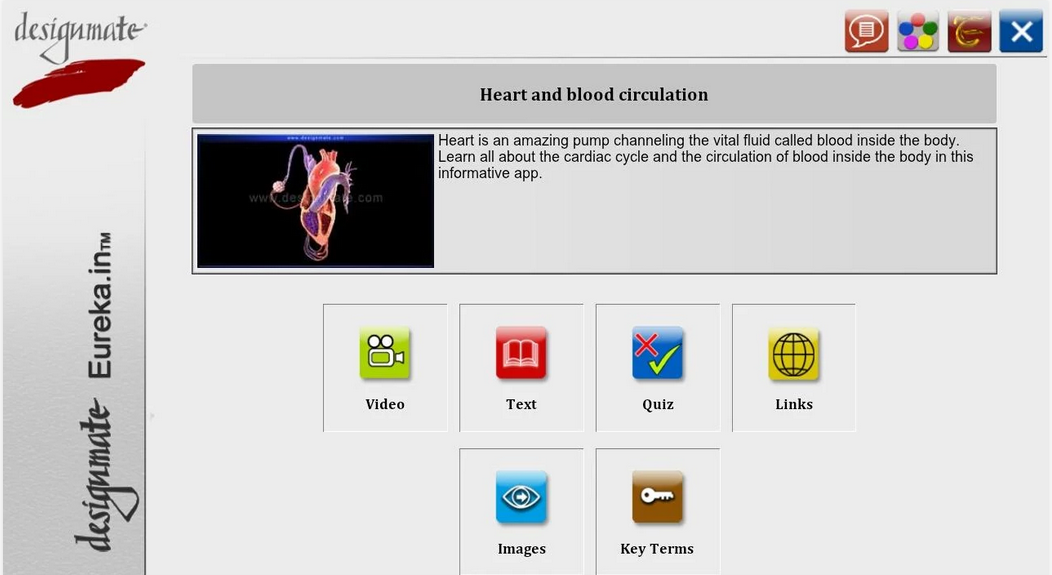
Apps such as Designmate’s Heart and Blood Circulation bring multimedia content, images, videos, screen readers, audio, quizzes with feedback, and key term glossaries together into one place. Students with cognitive processing difficulties can use the various media to enable them to access the biological content.


e-Bug is a digital learning environment that is animated and fun to navigate. Microbes are everywhere in the site and there are some very nice activities to do in and out of class. Quizzes and Games make this a great site for students with knowledge retention issues. The site is differentiated by the UK key stages; the earlier contact can be accessed by older students in order to help scaffold their knowledge.

Websites can be blocked, monitored for time, even keywords can be "turned off" during set times each day. If needed, you can set certain sites for time spent and add them to sets to block or unblock. Individuals that struggle to maintain concentration

Readers can control the text-to-speech in the books that MeeGenius is available for. The control offers students with processing disorders the chance to access the text at their own rate.


Students with Physical Difficulties

The virtual microscope benefits individuals with an array of difficulties. The site reads the the instructions and has a large image of a microscope that is easy to see. The instructions link with arrows and highlights to draw attention to the microscope. Individuals with limited movement but can access a mouse can learn to use the microscope.

Carolina’s digital microscopes have LED screens attached to the top of the device enabling the user to see the image of the slide without having to stand over the microscope; idea for wheelchair bound students. The microscope can be hooked up to a screen or projector to provide even larger viewing for those students who have trouble seeing the detail on the LED screen.

Google Voice allows students with motor skills impairments to access the search functionality of Google on a Chrome browser to enter search queries. The translation is remarkably accurate and is very fast.


Speak-It is a Chrome extension that reads multiple languages in male and female voices. German, French, Spanish, Italian, Russian, Chinese, etc.
This extension can be used for visually impaired individuals from these international backgrounds.
This extension could also be used to give Gifted and Talented language students listening tasks from native language web articles.


Students with Sensory Difficulties


Chromevox was developed by Google to provide accessibility tools native on the Chrome OS. It has a screen reader that can read single letters up to full paragraphs and is ideal for individuals with visual impairment. The speech can be altered in pitch and speed making the voice easier to listen to - lower pitch sounds older while higher sounds younger - the listener can choose the voice type they associate best with.
For unimpaired individuals that want to listen but can do so at a faster rate of speech, speeding up the speech can be achieved with this extension.

The page contains several links for webpage accessibility for the visually impaired. The page has been assessed at the highest level of high contrast colours.


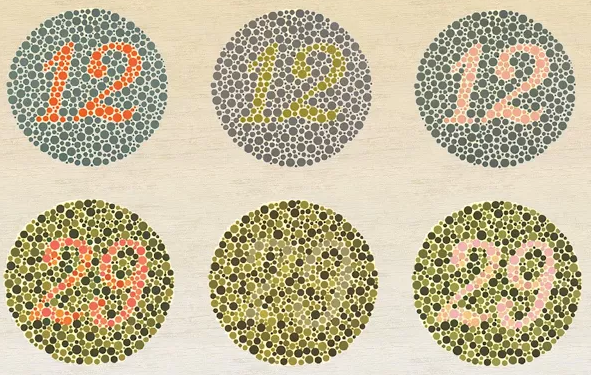
Daltonize is an extension that enhances colour contrast on webpages in order to allow colour blind individuals (tritanope, deuteranope and protanope) to tell the difference in colours. In the Biology class, this extension can also be used to simulate what colour blind individuals perceive; teachers can use the extension to develop material that use colours that work to generate the best contrast.


At-Risk Students

Careers
The ASPIRES site brings students into contact with careers in science. The lessons and activities are designed to give students the opportunity to see the possibilities beyond their immediate situation and motivate them to lift themselves out of their situation. The site has 11 case study lessons that help students take on the role of scientists.


Videos/TV shows and YouTube: Brainiac Science Abuse


There is much in science that cannot be replicated in the laboratory. Some Biology can be a bit “boring” and boredom can lead to misbehaviour by those students who, for whatever reason, are unable to focus in class. Targeted use of exciting media like Brainiac and Richard Hammond’s Miracles of Nature will help to allow troubled/at risk students focus and access the curriculum.

Interactive Narratives: N-Squad
The N-Squad site by RICE university has a module on Alcohol and its effects on the body. This digital animated narrative can be used to engage students from lower socio-economic backgrounds that tend to resort to alcohol abuse. The site educates the learner enabling them to make informed choices in their real life. Alcohol, nicotine and other drugs are embedded in the National Curriculum for Key Stages 3, 4 and 5. While they are considered pastoral issues, the Biology teachers address the “mechanics” of the drugs in the Biology class.

Games: Nobel Prize
The Nobel prize site provides games and animations that students can use and play to follow in the footsteps of the Nobel Prize winners of the past. Some schools will not permit blood in the classroom which can make the topic of blood, which is potentially very interesting, rather boring. Interesting and engaging games such as those offered by NobelPrize.org may be just what the bored and distracted student needs to stay on task.

Zondle and IAmLearning

Zondle and IAmLearning are games platforms with Gamification and Games As Rewards mechanics built into them. Science and Biology lend themselves to the types of questions that are available in these platform and “At Risk” students may find these mechanics engaging, allowing them to access the curriculum in a fun way. Students may not realise they are learning while they play and the quizzes record and report to the teachers the students progress avoiding the need for stressful summative tests.


Gifted and Talented Students

Speak-It is a Chrome extension that reads multiple languages in male and female voices. German, French, Spanish, Italian, Russian, Chinese, etc.
This extension could  be used to give Gifted and Talented language students listening tasks from native language web articles. It could also be used to assist students in their learning in a second language medium as the voices mimic stereotypical accents well for the language; assisting in the pronunciation of the written word.


This website provides engaging and challenging biology content including simulations, and videos, and online lab activities. Students with strong independent learning skills can access content from Stem Cells to Pharmacogenomics - the activities extend the classroom and allow G+T students take their studies to a university standard thus enhancing their breadth of knowledge at A-Level.


The History of Biology Game is a puzzle based game that takes the student all over the internet trying to solve biology puzzles from the development of the first microscope to synthetic organisms: it is HARD! G+T students in the A-Level biology class can  attempt to apply their knowledge of biology - protein synthesis and DNA replication - to the challenges in the game. Applications of the content studied at A-Level need to be used to successfully complete this game.

Friday, 4 April 2014

Cross Curriculum 3: Modern Foreign Languages

It makes sense as a curriculum coordinator to identify cross-over between subjects. This can lead to collegial interaction and team planning to enhance the curriculum for the students. Bringing teachers together to team plan and teach a common concept across subjects seems like a good idea, allowing teachers to come into contact with different teaching and delivery styles can only be a good thing, right? Philips, Lancaster and Cooper (2014) describe research that indicates to the benefits of team teaching but highlights challenges when it comes to the formation of successful teacher teams. Concerns of different delivery style, pedagogical approaches and even classroom management have been challenges.

While I didn't get a chance to tam plan or team teach this lesson, the Head of French did review the lesson and thought it would be good to teach and would work for her content and students.


Content Area:
Modern Foreign Languages (French) Environment theme / Biology Ecology and the Environment


Title:
L'environnement


Grade Level or Target Group:
Y10/11 iGCSE


Pre Planning
Big Idea(s):
The iGCSE specification for French states that students should:


  • develop understanding and use of written and spoken forms of the target language, in a range of familiar and practical contexts, and for a variety of purposes
  • develop the ability to communicate effectively in the target language through speaking, using a range of vocabulary and structures


The specification also states that students should  be able to listen, speak and write about the modern world and the environment.
Topic area D refers to “The modern world and the environment”. Students may communicate about:  Current affairs and social issues, Environmental issues,  The media (eg TV, film, radio, newspapers),  Information and communication technology (eg
internet, mobile phones, email).


The iGCSE Biology specification refers to Human Impacts on the Environment. The students have impacts they should know about and in the context of the MFL cross-over, may choose which is appropriate.


Section 4 - d) Human influences on the environment
Students will be assessed on their ability to:
  • 4.11 understand the biological consequences of pollution of air by sulfur dioxide and by carbon monoxide
  • 4.12 understand that water vapour, carbon dioxide, nitrous oxide, methane and CFCs are greenhouse gases
  • 4.13 understand how human activities contribute to greenhouse gases
  • 4.14 understand how an increase in greenhouse gases results in an enhanced greenhouse effect and that this may lead to global warming and its consequences
  • 4.15 understand the biological consequences of pollution of water by sewage, including increases in the number of micro-organisms causing depletion of oxygen
  • 4.16 understand that eutrophication can result from leached minerals from fertiliser
  • 4.17 understand the effects of deforestation, including leaching, soil erosion, disturbance of the water cycle and of the balance in atmospheric oxygen and carbon dioxide.


For the purposes of this lesson, the students will be given links to websites with specific environmental issues. They will also be given the opportunity to search for their own interests; this choice will produce differentiation in the task.


Websites from Canada are written for French and English and will be assigned to those students who require support. Sites from France are in French only and will be assigned to the more proficient language students.


Essential Questions:
What environmental issue are you interested in?
What are the issues that concern you / What are the effects of the issue?
What are scientists in doing about it?


Objective:
Given access to various French language websites for information, students will create a VoiceThread news report of no more than 5 minutes, or a written paragraph / poster of no more than 150 words, that answer the essential questions, while including relevant vocabulary for the environment topic.


Summative Assessment:
Students will submit their objects for peer and teacher assessment. Results of quizzes will be used to assess progress in the lesson.


Lesson Opening
Students will be presented with the topic title and objectives.
As a plenary activity, students will complete the quiz


Lesson Body
Students access one of the following sites. They will listen to or read the content aiming to summarise the content of the articles/videos, identifying the environment related terminology.


(most relevant to Biology specification)


Government of Canada Science site:

Sites from France:
  • La Recherche: http://issuu.com/larecherche - This site has multiple publications of different science topics. Students may search for something they are particularly interested in.


Students proceed to write their own environment related object using the language they have found.


Check for Understanding: Students begin by working their way through the GCSE Bitesize Revision and Test Bite: http://www.bbc.co.uk/schools/gcsebitesize/french/listeningh/h05_list_environment_rev1.shtml


Extended Practice: (Authentic assessment)
Students will enter the Language Perfect competition. http://start.languageperfect.com/


Lesson Closing:
Students will be given a choice of Quizlet quizzes to complete based on their language skills. First language French students, Gifted and Talented and students targeted A/A* will be assigned the harder quizzes.


Vocabulary


Sentences:


Materials needed for this lesson:

SMARTBoard and Projector, Students personal devices/iPods/iPads/Laptops, Headphones/microphones, Wifi access.


Phillips, M. (2014). Team teaching with technology: upsetting the TPACK applecart. Retrieved from http://acec2014.acce.edu.au/sites/2014/files/drafts/Team%20teaching%20with%20techonology.%20Upsetting%20the%20TPACK%20applecart.pdf.